
As the rich aroma of soy and ginger fills my kitchen, I can’t help but feel transported to a cozy ramen shop in Japan. Today, I’m sharing my take on the beloved Ramen Egg, or Ajitama, which transforms your meals into culinary masterpieces. These soft-boiled eggs, with their creamy, jammy yolks, are an effortless way to add umami depth and sophistication to your favorite dishes. Perfectly versatile, they’re just as delightful atop a steaming bowl of ramen as they are in a fresh salad or enjoyed alone as a snack. With minimal prep time and a few hours to marinate, you’ll soon find yourself with a fridge stocked full of flavor-packed treasures. Are you ready to elevate your egg game? Let’s dive in!

Why are Ramen Eggs so Special?
Flavor Explosion: These savory Ramen Eggs offer a delightful burst of umami that enhances any dish. Easy Preparation: With just a few simple steps, you can create restaurant-quality eggs right at home. Versatile Use: Enjoy them in ramen, salads, or even in sandwiches for that extra flair. Make-Ahead Magic: Prepare these eggs a day in advance, and they’ll keep for up to three days, making meal prep a breeze. If you’re also looking for delicious toppings, consider trying out my Southwest Egg Rolls or both Hash Brown Egg recipes, which pair perfectly with these flavorful eggs!
Ramen Egg Ingredients
For the Marinade
• Low Sodium Chicken Stock – Adds depth and umami flavor; substitute with shiitake mushroom stock for a vegetarian option.
• Soy Sauce – Provides saltiness and rich color; consider using tamari for a gluten-free version.
• Sake – Adds complexity and sweetness to the marinade; can be replaced with a mixture of water and a splash of rice vinegar for a non-alcoholic version.
• Evaporated Cane Sugar – Balances flavors in the marinade; brown sugar can be used as a substitute.
• Ginger – Infuses the marinade with a warming, aromatic essence; fresh ginger is recommended for the best flavor.
For the Eggs
• Large Eggs – The base of the dish, essential for that signature creamy yolk; use fresh eggs for easier peeling.
Embrace the simplicity and deliciousness of homemade Ramen Eggs as a fantastic addition to your culinary repertoire!
Step‑by‑Step Instructions for Ramen Egg
Step 1: Prepare the Marinade
Begin by combining 1 cup of low sodium chicken stock, 1/4 cup of soy sauce, 2 tablespoons of sake, 2 tablespoons of evaporated cane sugar, and 1 tablespoon of freshly grated ginger in a small saucepan. Heat this mixture over medium heat until it comes to a gentle boil for about 2 minutes, allowing the alcohol to evaporate. Remove from heat, and let the marinade cool to room temperature.
Step 2: Crack Each Egg
Take your fresh large eggs and gently tap a small divot at the bottom of each one using a spoon or the countertop. This small crack will make peeling the eggs much easier later on. Make sure not to crack them too hard, just enough to start the peeling process when they’re done cooking.
Step 3: Boil the Eggs
Place the eggs in a medium-sized saucepan, ensuring they are covered with about 2 inches of cold water. Bring the water to a vigorous boil over high heat. Once boiling, cover the pot and turn off the heat. Set a timer for 5-6 minutes, depending on how runny you’d like the yolk for your Ramen Eggs.
Step 4: Cool the Eggs
Once the timer goes off, quickly drain the hot water from the saucepan and immerse the eggs in a bowl of ice water. Let them cool completely for at least 20 minutes, which stops the cooking process and helps make peeling a breeze while ensuring the perfect creamy texture of the yolk.
Step 5: Peel the Eggs
Take the cooled eggs out of the ice water. Crack the shells gently and start peeling from the bottom where the divot is. Keeping the eggs wet during this process helps prevent the whites from sticking to the shell, ensuring that your Ramen Eggs remain intact and beautiful.
Step 6: Marinate the Eggs
Once peeled, place the eggs in a zipper bag or a shallow dish. Pour the cooled marinade over the eggs, ensuring they are submerged. Seal the bag tightly or cover the dish with plastic wrap, and let them marinate in the refrigerator for 8 to 12 hours, absorbing all those wonderful flavors.
Step 7: Store the Eggs
After marination, your savory Ramen Eggs are ready to enjoy! Transfer them to an airtight container if not consumed right away. They can be stored in the refrigerator for up to 3 days, retaining their delicious umami taste, ready to elevate your next meal.
Expert Tips for Ramen Eggs
-
Cool Marinade First: Allow the marinade to cool completely before adding the eggs to avoid cooking them further, ensuring the perfect flavor and texture.
-
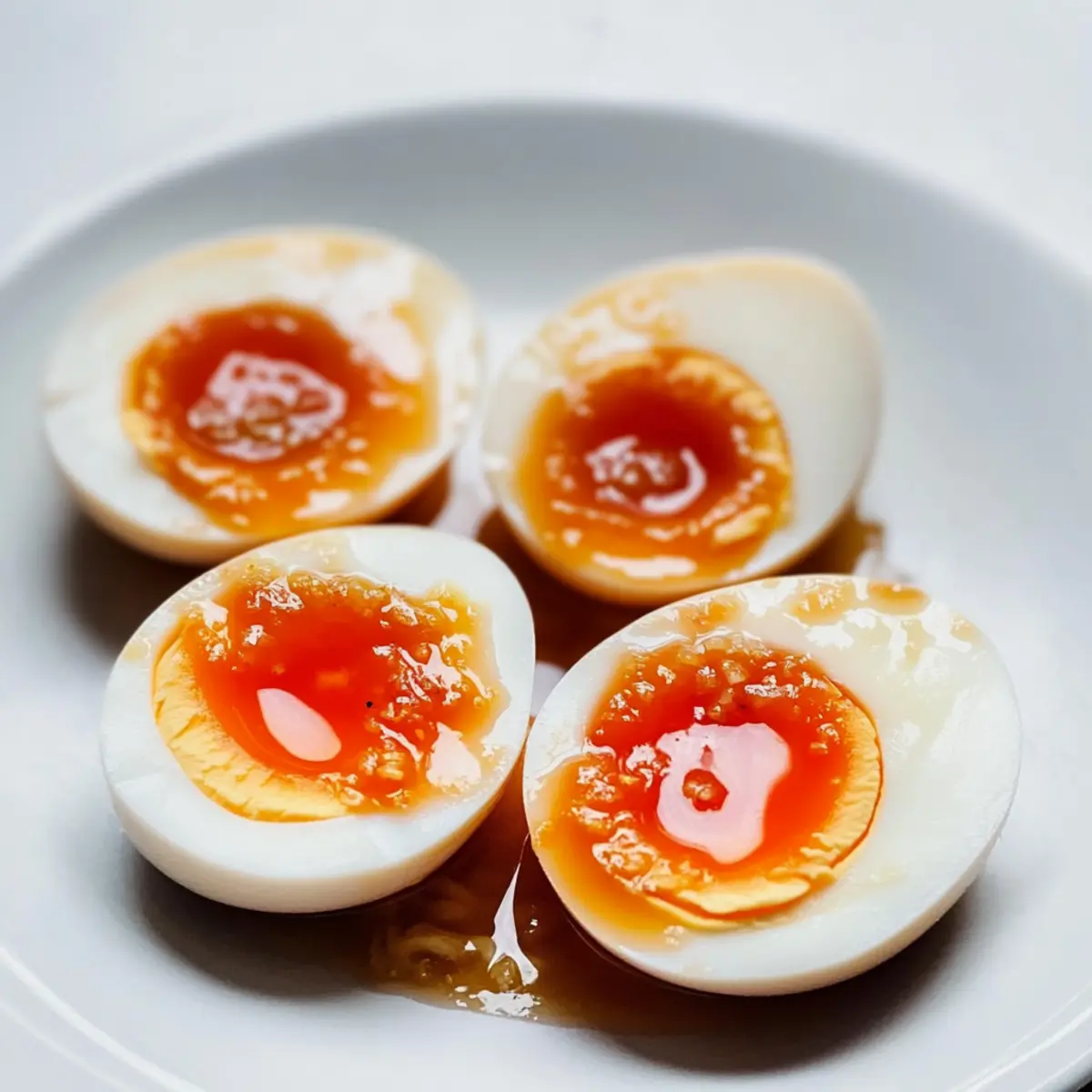
Time Adjustments: Depending on the size and initial temperature of your eggs, adjust the boiling time. For a firmer yolk, extend to 12 minutes for hard-boiled Ramen Eggs.
-
Ice Bath Importance: Plunge the boiled eggs into an ice bath immediately. This halts cooking and guarantees easy peeling, vital for a beautiful presentation.
-
Peeling Technique: Crack the eggs gently and peel from the bottom where you previously made the divot; keeping the eggs damp can help remove the shell more easily.
-
Storage Know-How: Store marinated Ramen Eggs in an airtight container in the fridge. Consume them within three days for the best taste and freshness.
Make Ahead Options
These delicious Ramen Eggs are perfect for meal prep, allowing you to savor umami-rich flavors with minimal fuss! You can prepare the marinade and boil the eggs up to 24 hours in advance. Simply follow the instructions to make the marinade and cook the eggs, then cool them in ice water. After peeling, place the eggs in the marinade and let them sit in the refrigerator for 8 to 12 hours to infuse flavor. Once marinated, the Ramen Eggs can be stored in an airtight container in the fridge for up to 3 days. To maintain their quality, ensure the marinade fully coats them before refrigerating. When ready to enjoy, simply slice them open and sprinkle with a pinch of salt for that perfect touch!
How to Store and Freeze Ramen Eggs
-
Fridge: Store marinated Ramen Eggs in an airtight container for up to 3 days. This ensures they maintain their delicious umami flavor while being ready to elevate your meals.
-
Freezer: Although not recommended, if you must freeze them, place the marinated eggs in a freezer-safe bag. They can last about 2 months, but their texture may change upon thawing.
-
Reheating: If using refrigerated eggs, there’s no need to heat them again; simply slice them and serve cold atop ramen or salads for a delightful treat!
-
Make-Ahead: These eggs are perfect for meal prep! Preparing them a day in advance maximizes their flavor and ensures convenience for your busy week ahead.
Ramen Egg Variations & Substitutions
Feel free to explore these exciting twists on the Ramen Egg to suit your taste buds and dietary needs!
- Vegetarian: Replace chicken stock with shiitake mushroom stock to maintain umami flavor without the meat.
- Gluten-Free: Swap soy sauce for tamari to keep it gluten-free while enjoying the same rich flavors.
- No Sake: For a non-alcoholic version, combine water with a splash of rice vinegar for a similar taste.
- Sweet Twist: Use sweet soy sauce for a richer, sweeter marinade, elevating your eggs to a new flavor dimension.
- Spicy Kick: Add garlic powder or chili flakes to the marinade for a delightful heat that complements the umami beautifully.
- Herb-Infused: Incorporate fresh herbs like cilantro or green onions in the marinade for a fresh, vibrant twist.
- Asian Citrus: Include a splash of yuzu juice in the marinade for a zesty, bright flavor that enhances the overall dish.
- Umami Boost: Pair your eggs with toppings like Southwest Egg Rolls or incorporate them into a winning bowl of Hash Brown Egg for an added burst of flavor and dimension!
What to Serve with Authentic Japanese Ramen Eggs (Ajitama)
Create a harmonious meal by pairing these luscious ramen eggs with equally delightful accompaniments.
- Flavorful Ramen Noodles: Soft, chewy noodles perfectly complement the creamy eggs, soaking up the savory broth for a comforting bowl.
- Fresh Cucumber Salad: A crisp salad adds a refreshing crunch, balancing the richness of the eggs while bringing vibrant color to your plate.
- Umami-rich Broth: Enhance your ramen experience with a rich, homemade broth or a store-bought version for convenience. It brings warmth and depth to the meal.
- Fermented Vegetables: Tangy pickled ginger or kimchi can add a zesty kick that contrasts beautifully with the eggs’ creamy texture, sparking excitement in every bite.
- Steamed Bok Choy: Tender greens offer a nutritious and mild flavor that complements the savory notes of the eggs and noodles, adding a touch of freshness.
- Chilled Sake: Elevate your dining experience with a glass of chilled sake, as its subtle sweetness enhances the umami flavor profile of the dish.
- Miso Soup: A warm bowl of miso soup provides comforting flavors and a probiotic boost, making it the perfect starter for your meal.
- Green Tea: A soothing cup of freshly brewed green tea rounds out the meal offering a light, aromatic finish, keeping your palate refreshed.
- Chocolate Mochi: For dessert, indulge in chewy chocolate mochi to satisfy your sweet tooth; it’s a delightful conclusion to a beautiful meal.

Ramen Egg Recipe FAQs
What type of eggs should I use for Ramen Eggs?
I recommend using large, fresh eggs for the best results. Fresh eggs are easier to peel and yield the perfect creamy yolk. The quality of the egg can significantly impact your final result, so go for the best you can find!
How should I store Ramen Eggs after marinating?
After marination, transfer the eggs to an airtight container and store them in the refrigerator. They will keep for up to 3 days, maintaining their delicious umami flavor and creamy texture. Just remember to consume them within this timeframe for the best taste.
Can I freeze Ramen Eggs?
Freezing is not typically recommended, as it can alter the texture of the eggs after thawing. If you must freeze them, place the marinated eggs in a freezer-safe bag, and they can last about 2 months. When ready to use, thaw them in the refrigerator overnight and enjoy them cold, though they may be softer than fresh ones.
What should I do if my Ramen Eggs are stuck to the shell after boiling?
If you encounter stubborn shells during peeling, try peeling them under running water or in a bowl of water. This can help loosen the eggs from the shell while keeping the whites intact. Additionally, using very fresh eggs can sometimes make peeling more challenging, so consider using eggs that are a week or so old.
Are Ramen Eggs safe for people with allergies?
These Ramen Eggs do contain common allergens such as eggs and soy sauce (which contains wheat). For those with soy allergies, consider using tamari or coconut aminos as a gluten-free alternative. Always check labels for any specific dietary needs or concerns, and substitute ingredients as necessary.
How do I achieve the perfect jammy yolk in my Ramen Eggs?
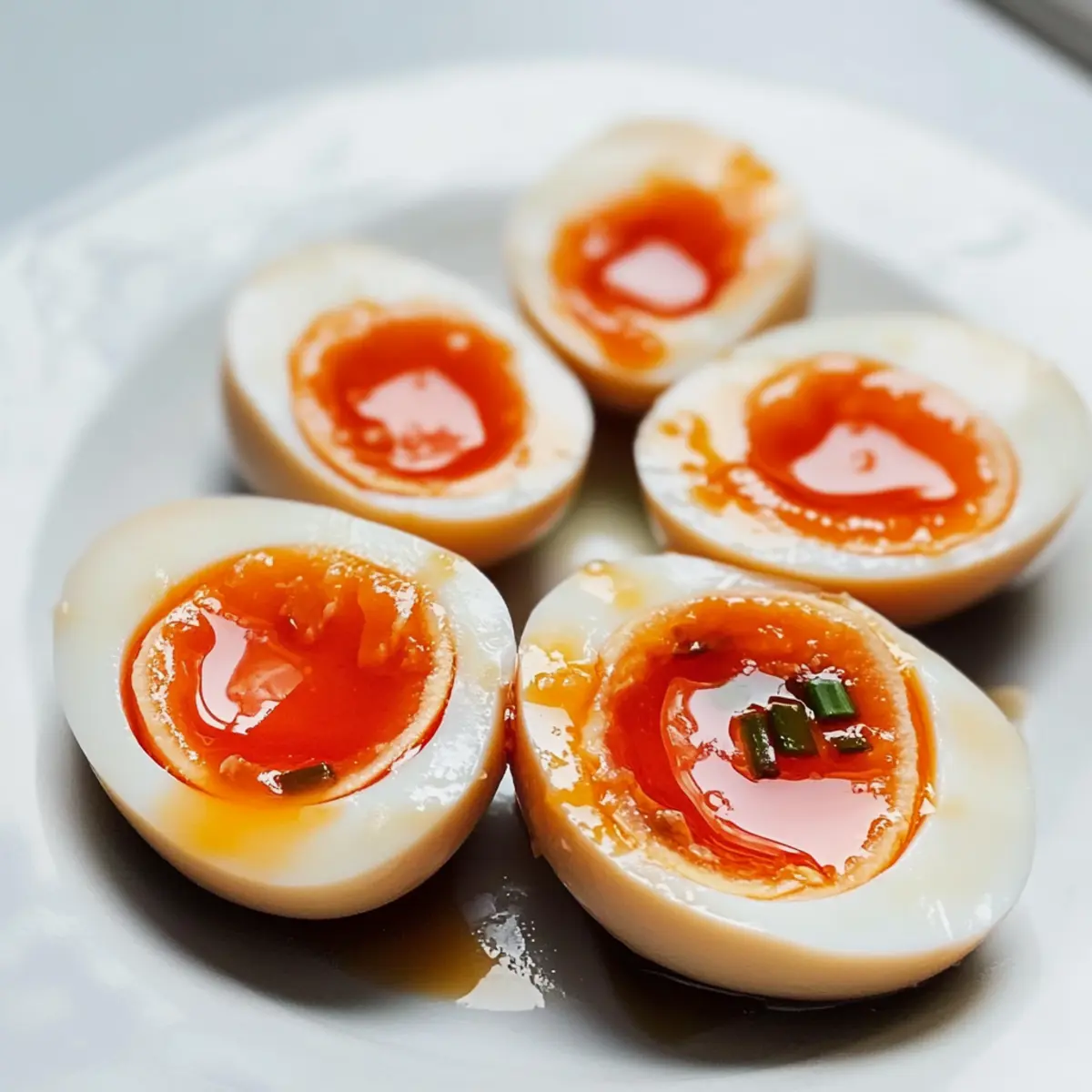
To get that signature jammy yolk, boil your large eggs for 5-6 minutes. After boiling, plunge them into an ice bath immediately for at least 20 minutes to stop the cooking process. This combination of time and cooling is key to achieving that ideal texture. Don’t forget, if you want firmer yolks, adjust the cooking time to 12 minutes for a hard-boiled option.
Savory Ramen Egg Recipe for Ultimate Umami Bliss
Ingredients
Equipment
Method
- Combine chicken stock, soy sauce, sake, sugar, and ginger in a small saucepan. Heat until boiling, then cool to room temperature.
- Gently tap each large egg to create a small divot on the bottom.
- Boil the eggs in 2 inches of water for 5-6 minutes, then remove from heat.
- Transfer boiled eggs to an ice water bath for 20 minutes.
- Peel eggs starting from the bottom divot.
- Submerge peeled eggs in the cooled marinade and refrigerate for 8-12 hours.
- Store marinated eggs in an airtight container for up to 3 days.
Leave a Reply