
As I was exploring the vibrant world of Korean cuisine, I stumbled upon a delightful twist on a classic comfort food: Korean meatloaf with gochujang glaze. This luscious dish marries juicy ground pork with a captivating blend of Korean spices, creating a savory masterpiece that’s bound to be a showstopper at your dinner table. The gochujang glaze adds a perfect kiss of heat and sweetness, transforming the humble meatloaf into something truly special. Plus, with a zesty kick from mustard pickled onions, this recipe not only offers a fun twist but also makes for a quick and satisfying meal that will keep your family happy and full. Ready to take your meatloaf game to the next level? Let’s dive into this flavorful culinary adventure!
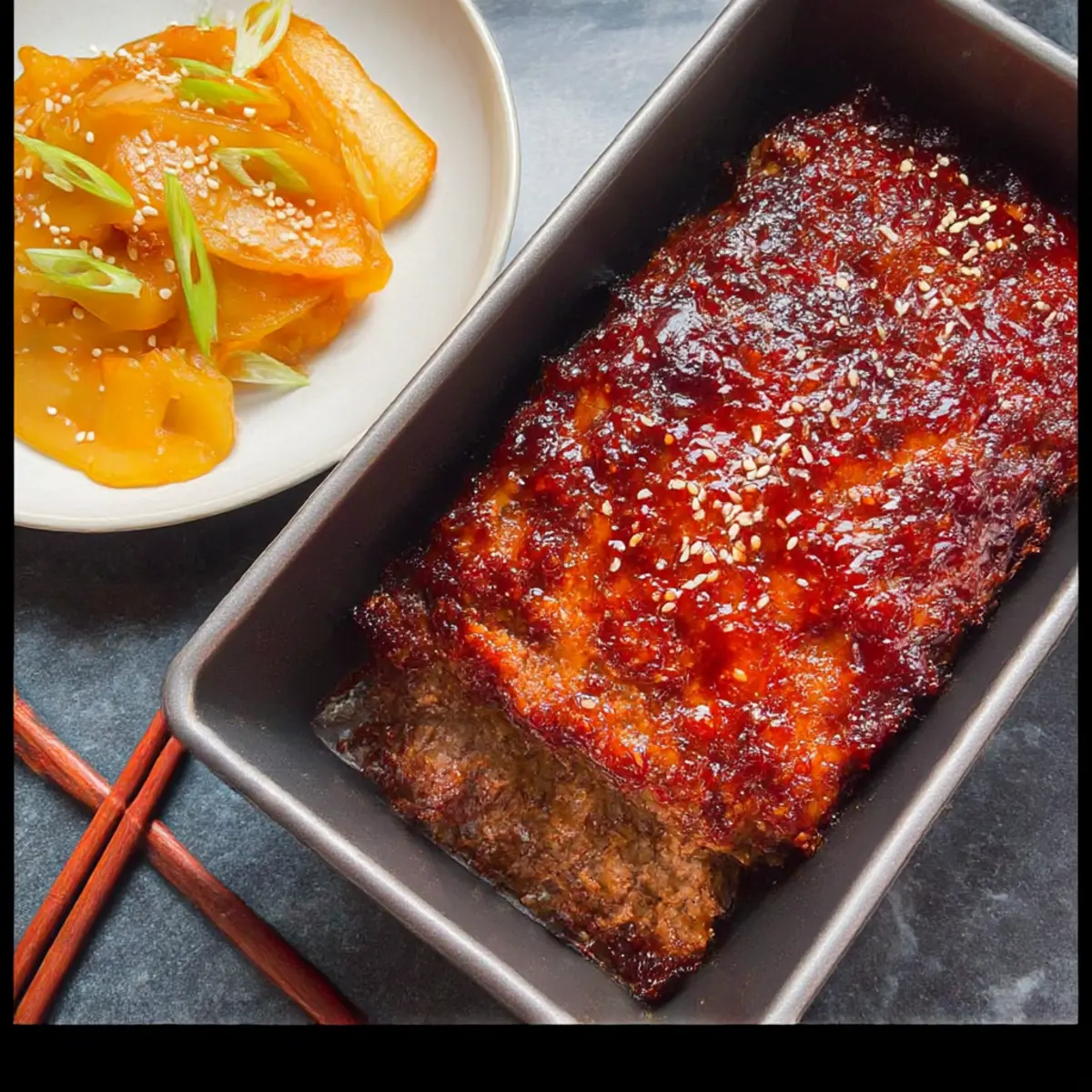
Why is this meatloaf recipe special?
Unique Fusion: This Korean meatloaf with gochujang glaze is a fresh reimagining of a classic dish, combining comforting flavors with a spicy kick.
Rich Umami: With ground pork and enticing spices, each bite bursts with savory goodness, making it an instant favorite.
Time-Saving Delight: Ready in under an hour, this dish marries convenience with taste, perfect for busy weeknights!
Perfect Pairing: Serve it alongside mustard pickled onions to elevate the flavor, reminiscent of a well-balanced meal you’d find at a top-notch restaurant.
All-around Appeal: Guaranteed to impress family and guests alike, this recipe transforms meatloaf into an exciting culinary experience! For another twist on comfort food, check out my Korean Fried Chicken or if you prefer something the kids will love, try these Sausage Sweet Sauce dishes!
Korean Meatloaf with Gochujang Glaze Ingredients
For the Meatloaf
- Ground Pork – Provides the main protein and structure; you can substitute with ground chicken or turkey for a leaner option.
- Panko Bread Crumbs – Adds lightness and texture; feel free to use regular breadcrumbs or gluten-free breadcrumbs if needed.
- Onion (finely diced) – Contributes moisture and flavor; shallots can serve as a milder alternative.
- Garlic (crushed) – Enhances overall flavor with savory notes; fresh garlic is recommended for the best results.
- Gochujang – Provides heat and depth of flavor; sambal oelek can be used for a different heat profile if desired.
- Green Onions (minced) – Offers freshness and a mild bite to the dish.
- Kosher Salt – Balances flavors; regular salt can be used if kosher is not available.
- Eggs (lightly beaten) – Acts as a binding agent to hold the meatloaf together.
- Vegetable Oil – Used for sautéing onions; any neutral oil can work as a substitute.
- Sesame Seeds – Garnish for added crunch and visual appeal; this is optional.
For the Gochujang Glaze
- Apricot Jam – Adds sweetness to balance the spiciness; feel free to swap with other fruit jams for varied flavors.
- Rice Wine Vinegar – Provides acidity; apple cider vinegar can be used if needed.
- Honey – Adds natural sweetness; maple syrup or agave serve as alternatives for a different flavor profile.
- Soy Sauce – Contributes saltiness and umami; tamari can be used for a gluten-free option.
- Sesame Oil – Imbues a nutty flavor that complements the meatloaf beautifully.
- Granulated Garlic Powder – Enhances flavors directly; you can replace it with fresh minced garlic if you prefer.
With these delightful ingredients, you’re ready to create a mouthwatering Korean meatloaf with gochujang glaze that’s sure to impress!
Step‑by‑Step Instructions for Korean Meatloaf with Gochujang Glaze
Step 1: Preheat the Oven
Begin by preheating your oven to 350°F (175°C). This ensures that as you prepare the Korean meatloaf with gochujang glaze, the oven is at the perfect temperature to cook it evenly.
Step 2: Sauté the Onions and Garlic
In a skillet, heat a splash of vegetable oil over medium heat. Add the finely diced onion and sauté for about 10 minutes, or until they become translucent and fragrant. Stir in the crushed garlic and cook for an additional 2 minutes. Once done, remove from the heat and set aside to cool.
Step 3: Combine the Flavorful Ingredients
In a large mixing bowl, combine the cooled onion and garlic mixture with minced green onions, gochujang, and lightly beaten eggs. Sprinkle in the kosher salt and mix everything well. This flavorful base is essential for ensuring that your Korean meatloaf with gochujang glaze is packed with deliciousness.
Step 4: Mix the Meatloaf
Gently fold the ground pork into the bowl with the onion-gochujang mixture. Add panko breadcrumbs to the mixture and blend everything together using your hands, being careful not to over-pack it. The goal is to maintain a tender texture while ensuring that all flavors meld together beautifully.
Step 5: Form the Meatloaf
Transfer the mixture into a loaf pan, pressing it gently to create a uniform shape. If you prefer, you can shape the meatloaf freely on a baking sheet lined with parchment paper. This Korean meatloaf with gochujang glaze will bake into a beautiful, juicy loaf that’s easy to slice.
Step 6: Bake the Meatloaf
Place the loaf pan in the preheated oven and bake for about 40 minutes, or until the internal temperature reaches 140°F (60°C). Your meatloaf should be slightly golden on the outside and will begin to smell deliciously savory!
Step 7: Prepare the Gochujang Glaze
While the meatloaf bakes, prepare the glaze by mixing together apricot jam, rice wine vinegar, honey, soy sauce, sesame oil, and granulated garlic powder in a medium bowl. This sweet and spicy glaze will elevate your dish and give it a shiny finish.
Step 8: Glaze and Finish Baking
Once the meatloaf reaches 140°F, remove it from the oven and generously brush the gochujang glaze over the top of the loaf. Return it to the oven and continue baking for another 10-15 minutes, or until the internal temperature hits 160°F (71°C). The glaze should bubble and caramelize slightly, creating a beautiful crust.
Step 9: Let it Rest and Serve
After baking, allow the Korean meatloaf with gochujang glaze to rest for a few minutes before slicing. This resting period helps the juices redistribute, ensuring each slice is juicy and tender. Serve it alongside mustard pickled onions for a refreshing contrast!
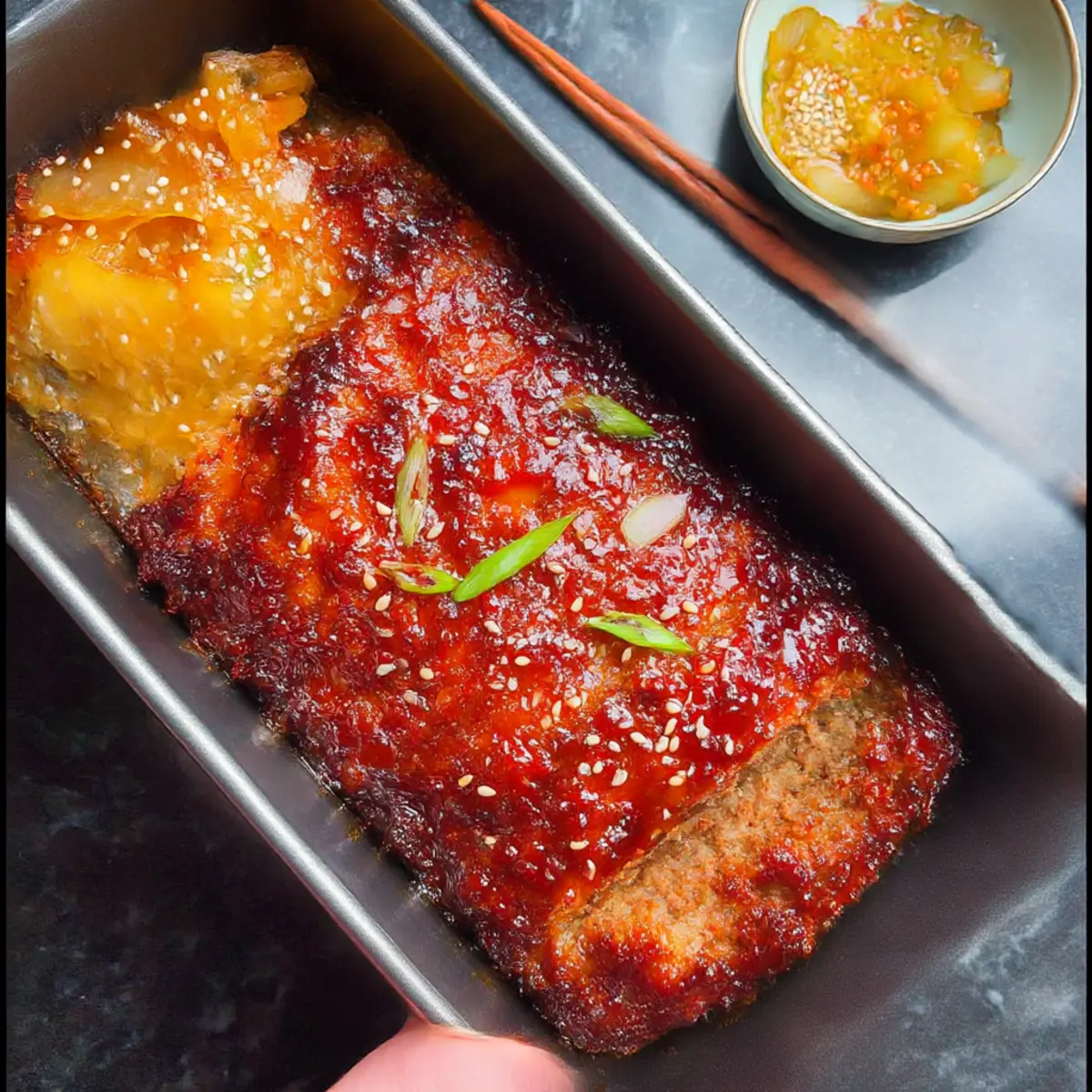
Variations & Substitutions for Korean Meatloaf
Feel free to explore different flavor profiles and ingredients to make this dish uniquely yours!
-
Ground Meat Swaps: Use beef, turkey, or a blend of meats for varied tastes and textures. Each type brings a new flavor nuance to your meatloaf.
-
Veggie Boost: Incorporate shredded vegetables, like carrots or zucchini, to enhance nutrition and moisture. This twist not only adds color but also makes the dish even more wholesome.
-
Glaze Alternatives: Swap out apricot jam for peach or pineapple preserves for a fruity twist that complements the gochujang beautifully. Each jam adds its own layer of sweetness.
-
Vinegar Variation: Instead of rice wine vinegar, try using apple cider vinegar or even balsamic for a deeper flavor in the glaze. A simple switch can take the dish in new directions.
-
Heat Levels: Adjust the spiciness by using milder ingredients like chili garlic sauce if gochujang is too hot. This provides an option for those who prefer less heat without sacrificing flavor.
-
Breadcrumb Choices: For a gluten-free version, substitute panko breadcrumbs with crushed gluten-free crackers or oats, maintaining that wonderful texture while catering to dietary needs.
-
Onion Alternatives: If you’re looking for a milder onion flavor, shallots or even leeks can be a delightful swap, resulting in a slightly different aroma and taste.
-
Adding Herbs: Mixing in fresh herbs like cilantro or basil can introduce a refreshing zest to your meatloaf, enhancing that savory flavor profile in a lovely way.
Remember, it’s all about getting creative! For more comfort food inspiration, try pairing this lovely meatloaf with my favorite Peach Cake with Brown Sugar Frosting for dessert!
Make Ahead Options
These Korean meatloaf with gochujang glaze options are ideal for busy home cooks looking to save time during the week! You can prepare the meat mixture and shape the loaf up to 24 hours in advance, simply cover it tightly and refrigerate. For the best flavor retention, keep the gochujang glaze separate and store it in the refrigerator. When you’re ready to bake, just pull the meatloaf out, apply the glaze, and bake as directed. You can also freeze the unbaked meatloaf for up to 3 months; wrap it well in plastic wrap and foil. This way, you’ll have a delicious meal ready to pop in the oven, providing comforting flavors without the fuss on a busy night!
Storage Tips for Korean Meatloaf with Gochujang Glaze
Fridge: Store leftovers in an airtight container for up to 3 days. This keeps the flavors intact while ensuring it remains moist and enjoyable.
Freezer: For longer storage, wrap the meatloaf tightly in plastic wrap, then in aluminum foil or freezer-safe bags. It can be frozen for up to 3 months without losing its delicious taste.
Reheating: To enjoy your Korean meatloaf with gochujang glaze, thaw overnight in the refrigerator. Reheat in the oven at 350°F (175°C) until warmed through, about 20 minutes.
Slicing Tip: Slice the meatloaf before storing for easier reheating and serving. This will help maintain the texture and flavor when enjoying leftovers!
What to Serve with Korean Meatloaf with Gochujang Glaze
Elevate your mealtime experience by adding delightful sides that complement the bold flavors of this comforting dish.
- Steamed Rice: The simplicity of fluffy jasmine rice soaks up the gochujang glaze, providing a perfect foil to the meatloaf’s vibrant taste.
- Sautéed Greens: Lightly dressed spinach or bok choy adds a fresh crunch and a pop of color, balancing the meat’s richness while delivering nutritional goodness.
- Mustard Pickled Onions: These tangy accompaniments cut through the savory notes, creating a zesty contrast that enhances each bite of the meatloaf.
- Korean Potato Salad: Creamy and slightly sweet, this dish offers a delightful creaminess that mirrors the moist texture of the meatloaf while introducing a different flavor profile.
- Kimchi: This fermented side contributes a spicy and tangy bite, aligning beautifully with the umami flavors of the meatloaf and adding a traditional Korean twist.
- Cold Beer: A refreshing lager or pale ale offers a crisp finish to the meal, enhancing the savoriness of the meatloaf while providing a delightful palate cleanse.
Expert Tips for Korean Meatloaf with Gochujang Glaze
Use a Thermometer: Ensure perfect doneness by using an instant-read thermometer. Aim for 160°F to avoid dry meatloaf.
Let It Rest: After baking, let your meatloaf rest for a few minutes before slicing. This allows juices to redistribute, enhancing the flavor.
Avoid Overmixing: When combining ingredients, mix gently to prevent a dense texture. For a tender meatloaf, don’t over-pack the mixture.
Glaze Timing: Apply the gochujang glaze during the last stage of baking for a sticky, caramelized finish that amps up the flavor.
Prepare Your Onions: Soak sliced onions in cold water for pickling to reduce pungency, ensuring a sharp, yet balanced taste alongside the meatloaf.
Customize Flavor: Don’t hesitate to experiment with the glaze. Using different jams or adding spices can personalize your Korean meatloaf with gochujang glaze!
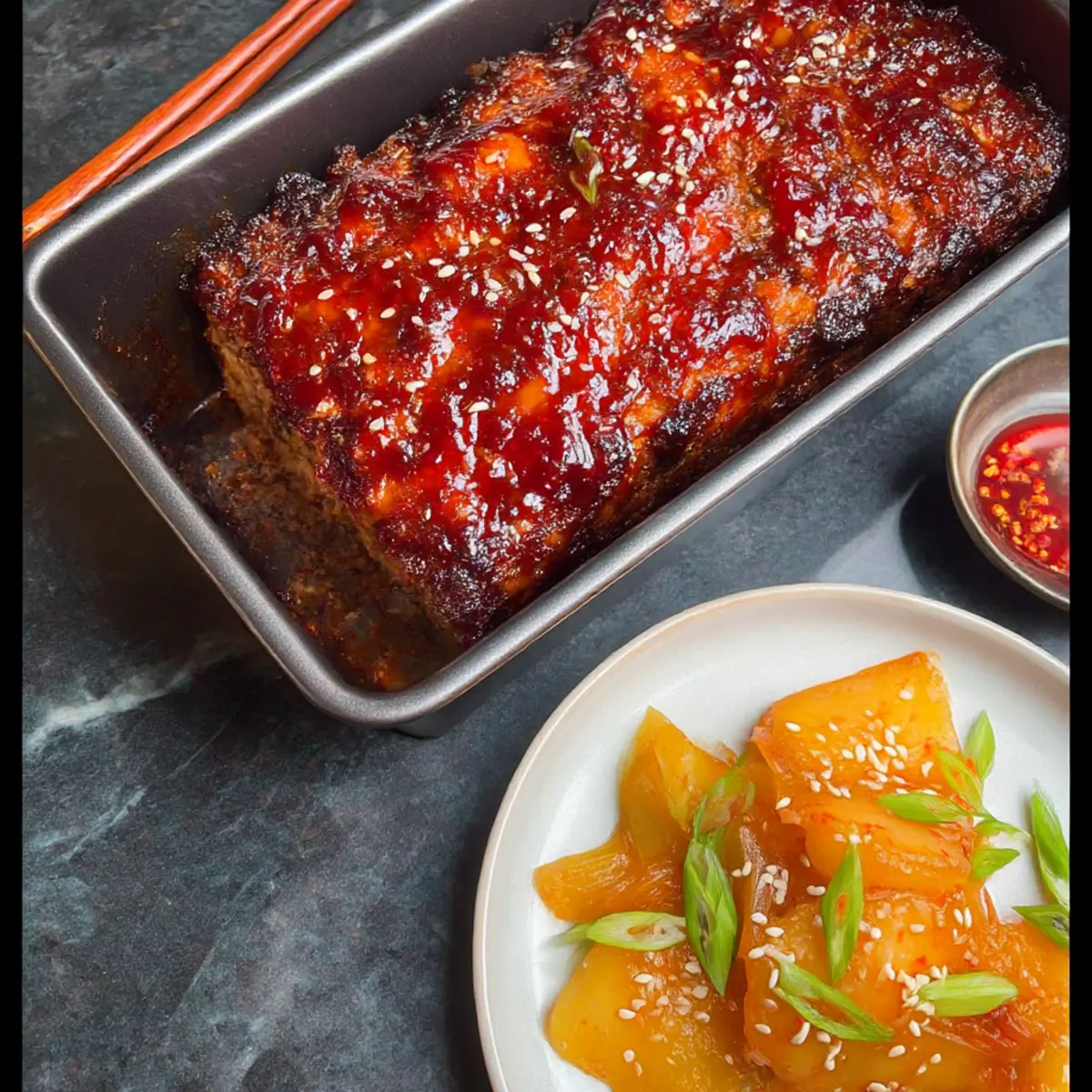
Korean Meatloaf with Gochujang Glaze Recipe FAQs
What type of ground meat should I use for the meatloaf?
I recommend using ground pork as it adds moisture and flavor to the Korean meatloaf with gochujang glaze. However, if you’re looking for a leaner option, ground chicken or turkey can also work nicely!
How should I store leftovers and how long will they last?
Store any leftovers in an airtight container in the refrigerator for up to 3 days. This helps keep the meatloaf moist and flavorful. If you have more than you can eat, don’t worry!
Can I freeze the meatloaf, and if so, how?
Absolutely! To freeze, first let the meatloaf cool completely. Then, wrap it tightly in plastic wrap followed by aluminum foil or place it in a freezer-safe bag. You can freeze it for up to 3 months. When you’re ready to enjoy it, just thaw it overnight in the fridge!
What are some common problems when making meatloaf?
A common issue is dry meatloaf, which can happen if it’s overcooked. Always use an instant-read thermometer to check for an internal temperature of 160°F (71°C) to ensure it’s perfectly juicy. Another tip is to avoid overmixing the ingredients to keep it tender!
Is this recipe suitable for people with dietary restrictions?
Yes! If there are concerns regarding diets, you can easily modify certain ingredients. For a gluten-free version, use gluten-free breadcrumbs and soy sauce. Also, if anyone is allergic to eggs, consider using a flaxseed meal or unsweetened applesauce as a binding agent.
What should I serve with this Korean meatloaf?
This delightful meatloaf pairs beautifully with steamed rice and sautéed greens. I often add mustard pickled onions on the side for a zesty touch that complements the savory flavors of the meatloaf wonderfully!
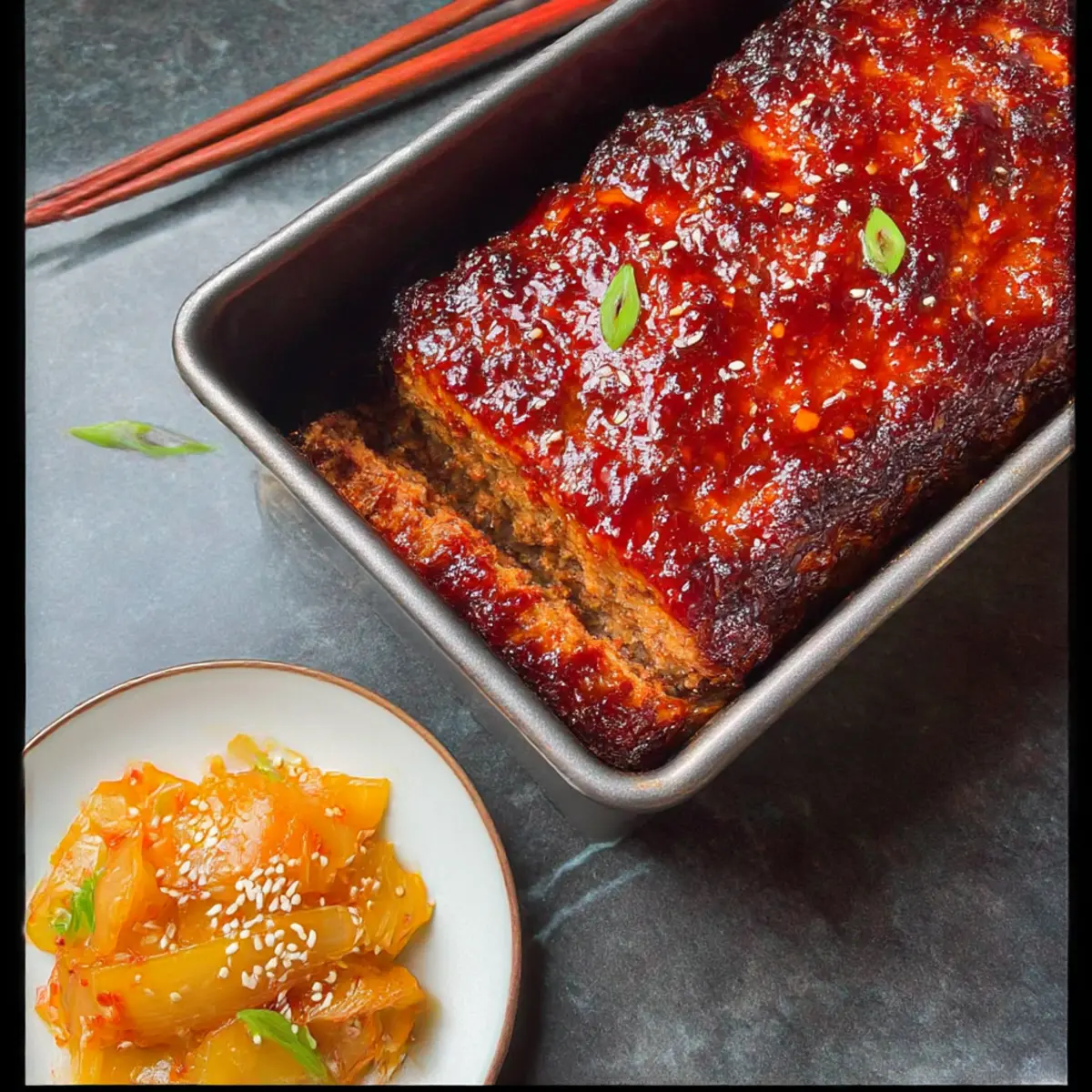
Korean Meatloaf with Gochujang Glaze for Comfort Food Lovers
Ingredients
Equipment
Method
- Preheat your oven to 350°F (175°C).
- In a skillet, heat a splash of vegetable oil over medium heat. Add the finely diced onion and sauté for about 10 minutes until translucent. Add crushed garlic and cook for an additional 2 minutes.
- In a large mixing bowl, combine the cooled onion and garlic mixture with minced green onions, gochujang, and lightly beaten eggs. Sprinkle kosher salt and mix well.
- Gently fold the ground pork into the bowl with the onion-gochujang mixture. Add panko breadcrumbs and blend everything together using your hands.
- Transfer the mixture into a loaf pan, pressing gently to create a uniform shape.
- Place the loaf pan in the oven and bake for about 40 minutes or until the internal temperature reaches 140°F (60°C).
- While the meatloaf bakes, prepare the glaze by mixing apricot jam, rice wine vinegar, honey, soy sauce, sesame oil, and granulated garlic powder in a medium bowl.
- Once the meatloaf reaches 140°F, remove it and brush the gochujang glaze over the top. Return to the oven and bake for another 10-15 minutes until the internal temperature hits 160°F (71°C).
- After baking, let the meatloaf rest for a few minutes before slicing.
Leave a Reply