
As I wandered through the vibrant streets of Seoul, I stumbled upon a bustling food stall that was a haven for egg lovers. The aroma wafting through the air led me to the star of the show: Korean Marinated Eggs, or Mayak Gyeran. With their perfectly soft-boiled, jammy yolks, these addictive delights are enveloped in a savory marinade of soy sauce, garlic, and chili—each bite igniting an irresistible umami flavor. What I adore about these Korean marinated eggs is not just their tantalizing taste, but also how quick and budget-friendly they are to whip up at home. Whether enjoyed as a standalone snack, atop warm rice, or nestled in a bento box, they’re bound to impress. Curious to learn how to make these gems yourself? Let’s dive into the recipe!
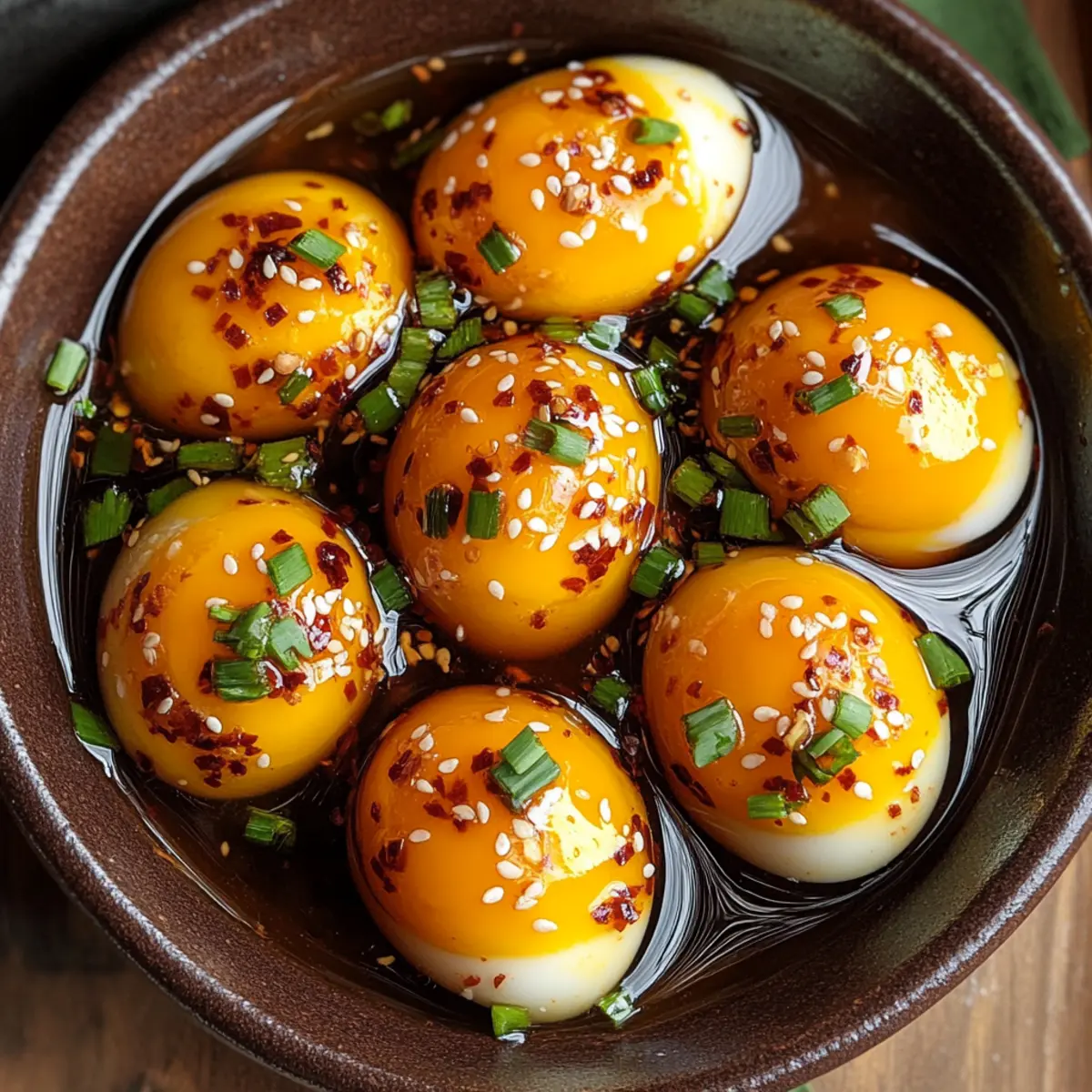
Why Are Korean Marinated Eggs So Addictive?
Irresistible Umami: The unique blend of soy sauce, garlic, and chili elevates these eggs, delivering a savory punch that you’ll crave.
Quick and Easy: With just a few ingredients and simple steps, you can have a delicious snack or meal-prep option ready in no time.
Versatile Delight: Whether enjoyed solo, over rice, or in a bento box, these marinated eggs fit perfectly into any meal or occasion.
Budget-Friendly: Using common pantry staples, this recipe proves that gourmet flavor doesn’t have to come with a hefty price tag.
Meal Prep Magic: These eggs keep well in the fridge for up to four days, intensifying in flavor, making them an effortless make-ahead option—perfect for busy weeks! Want more delightful recipes? Check out these Korean Fried Chicken options to complement your meal!
Korean Marinated Eggs Ingredients
• Gather these key components for irresistible Korean marinated eggs!
For the Eggs
- Fresh Eggs – Essential for the perfect soft-boiled texture; always choose the freshest for the best results.
For the Marinade
- Soy Sauce – The star of the marinade, imparting deep umami flavors; opt for tamari for a gluten-free option.
- Garlic – Fresh minced garlic adds aromatic depth; garlic powder can be a quick alternative if needed.
- Chili (fresh or flakes) – Introduces a kick of heat; adjust according to your spice level preference or use sriracha for ease.
- Brown Sugar – Balances the saltiness with a hint of sweetness; honey or maple syrup can be a delightful substitute.
- Sesame Oil – Adds a rich, nutty note to the marinade; use sparingly as it’s potent; neutral oil can replace it if needed.
- Green Onions – Offer a fresh, crunchy texture; substitute with shallots or chives when necessary.
These delightful Korean marinated eggs are not just easy to prepare, but they also deliver unparalleled flavor and satisfaction!
Step‑by‑Step Instructions for Korean Marinated Eggs
Step 1: Boil Eggs
Begin by placing fresh eggs in a medium saucepan, ensuring they are covered with cool water. Bring the water to a rolling boil over medium heat, then reduce to a gentle simmer. Cook the eggs for 6 minutes for that perfect jammy texture. Once the time is up, quickly transfer the eggs to an ice bath to halt further cooking and cool them down.
Step 2: Prepare Marinade
While the eggs are cooling, grab a mixing bowl and combine soy sauce, minced garlic, fresh chili or chili flakes, brown sugar, and sesame oil. Stir the mixture thoroughly until the sugar has completely dissolved and all ingredients are well blended. This savory marinade will enhance the eggs’ flavor with every bite you take of your Korean marinated eggs.
Step 3: Cool & Peel
Once the eggs are thoroughly chilled in the ice bath, gently tap each egg on a hard surface to crack the shell. Begin peeling the eggs under running water or in a bowl of water for easier removal. Aim to keep the whites intact, revealing the silky yolks underneath, which will beautifully absorb the marinade.
Step 4: Marinate Eggs
In an airtight container, place the peeled eggs side by side. Carefully pour the prepared marinade over the eggs, ensuring they are fully submerged. It’s important for the eggs to soak in this flavorful concoction so that each bite of your Korean marinated eggs is bursting with that irresistible umami taste.
Step 5: Refrigerate
Seal the container tightly and place it in the refrigerator to marinate. Allow the eggs to soak for at least 6 hours, though overnight is ideal for deep flavor absorption. The waiting time will ensure that your Korean marinated eggs are perfectly seasoned, enhancing their overall taste and making them an enjoyable snack or delectable addition to any meal.
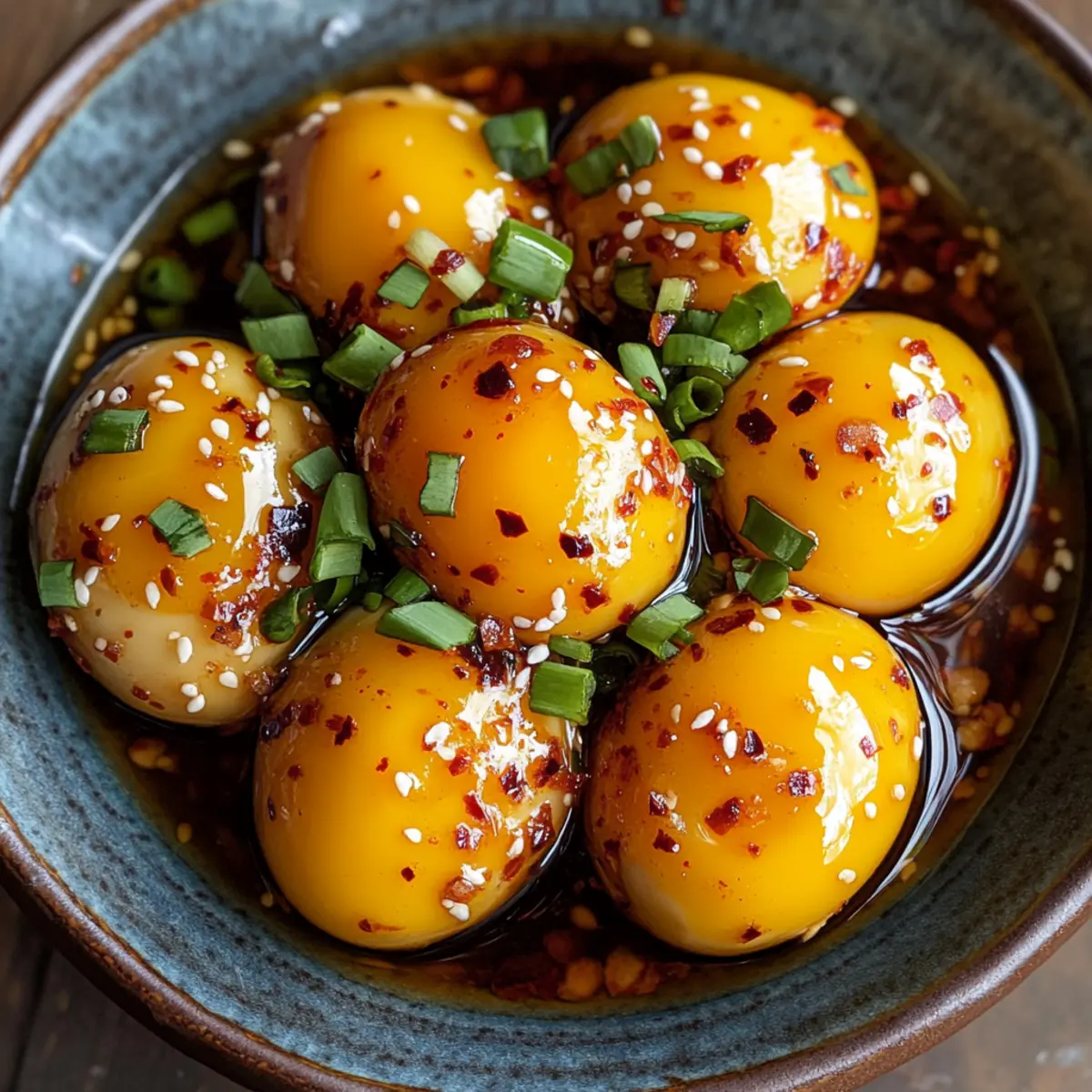
What to Serve with Korean Marinated Eggs
These savory delights create a world of flavor possibility, perfect for building a delightful and fulfilling meal.
- Steamed Rice: Simple yet satisfying, fluffy steamed rice soaks up the marinade, making every bite of egg even more flavorful and comforting.
- Noodle Bowl: Toss with your favorite noodles, fresh veggies, and a drizzle of sesame oil to create a vibrant, nourishing dish that complements the rich flavors of the eggs.
- Korean Kimchi: The tangy crunch of kimchi brings an exciting contrast to the creamy eggs, elevating your meal with probiotics and traditional flavors.
- Vegetable Stir-Fry: A colorful medley of sautéed vegetables adds a freshness to your plate, balancing the savory richness of the marinated eggs.
- Cucumber Salad: Crisp, refreshing cucumber salad drizzled with a light vinegar dressing enhances the umami of the eggs while providing a delightful crunch.
- Hot Tea: Pair your Korean marinated eggs with a soothing cup of green tea to cleanse the palate and complement the umami-rich flavors.
- Korean BBQ: Serve alongside grilled meats or bulgogi for a delectable spread that’s perfect for sharing and showcases the versatility of these marinated eggs.
- Sweet Banchan: Sweet potato or pickled radish banchan can be a perfect accompaniment; the slight sweetness contrasts beautifully with the salty marinade of the eggs.
Expert Tips for Korean Marinated Eggs
-
Fresh Eggs Matter: Always use fresh eggs for the best texture and flavor. Stale eggs are tricky to peel and can ruin the dish.
-
Cooling Technique: Place the eggs in an ice bath immediately after boiling to prevent overcooking and make peeling easier.
-
Keep Them Submerged: Ensure the eggs are completely submerged in the marinade to achieve even flavor absorption. Flip them halfway through for best results.
-
Customize Your Marinade: Adjust the chili and sugar levels to suit your taste; don’t be afraid to experiment for your ideal Korean marinated eggs flavor!
-
Storage Tips: Store marinated eggs in the fridge for up to four days; their flavors will deepen, enhancing every bite in your meal prep.
How to Store and Freeze Korean Marinated Eggs
Fridge: Keep your Korean marinated eggs stored in an airtight container in the fridge for up to 4 days. The flavors will intensify as they marinate.
Freezer: It’s not recommended to freeze marinated eggs, as the texture could be adversely affected after thawing. Enjoy them fresh for the best experience.
Reheating: If you’d like to enjoy them warm, briefly warm the eggs in a hot water bath for a couple of minutes without boiling, preserving their delicious jammy yolk.
Airtight Storage: Ensure the eggs are fully submerged in the marinade to maintain flavor and moisture until you’re ready to savor their delightful taste!
Make Ahead Options
These Korean Marinated Eggs are perfect for meal prep enthusiasts! You can boil and marinate the eggs up to 24 hours in advance, allowing the flavors to deepen wonderfully. To prepare ahead, simply follow the initial steps: boil the eggs for 6 minutes, cool them in an ice bath, and then gently peel them. Next, whisk together the marinade ingredients and submerge the eggs in the mixture before refrigerating. They will maintain their delightful quality in the refrigerator for up to 4 days, making them an easy grab-and-go snack or a flavorful topping for meals. When you’re ready to enjoy, just slice and serve—delivering gourmet taste without the hassle!
Korean Marinated Eggs: Creative Variations
Feel free to make these tasty Korean marinated eggs uniquely yours with some easy changes and personal touches!
-
Spicy Infusion: Add gochujang to the marinade for a fiery kick—perfect for heat lovers.
-
Sweet Replacement: Swap brown sugar for honey or maple syrup to impart a deliciously different sweetness, elevating the flavor profile.
-
Citrus Zing: Incorporate a splash of mandarin or lime juice in the marinade for a zesty twist that brightens up each bite!
-
Sesame Boost: Throw in toasted sesame seeds during marination for an extra crunch and nutty flavor, enhancing the dish’s texture.
-
Herbal Touch: Add fresh herbs like cilantro or finely chopped basil to the marinade for a refreshing aroma and elevating flavors.
-
Gluten-Free Option: Use tamari instead of soy sauce to make your Korean marinated eggs gluten-free, so everyone can enjoy them.
-
Umami Upgrade: For mushroom fans, try adding a splash of mushroom soy sauce to intensify that umami goodness.
-
Bento Box Delight: Make a cute bento box lunch by pairing these eggs with pickled veggies and steamed rice for a colorful, complete meal.
Perfect for a quick snack or as a flavor-packed topping for your favorite dishes, these variations will help you customize your experience. If you’re looking for more delicious options, why not try these mouthwatering Korean Fried Chicken or the savory Korean BBQ Meatballs?

Korean Marinated Eggs Recipe FAQs
How do I choose the best eggs for Korean marinated eggs?
Absolutely! Always select the freshest eggs possible for the best flavor and texture. Fresh eggs will have firmer whites, making them easier to peel after boiling. Look for eggs with clean, unblemished shells and avoid those with dark spots all over, as that indicates they may be stale.
What is the best way to store leftover Korean marinated eggs?
Very! Store your Korean marinated eggs in an airtight container in the refrigerator. They will keep well for up to 4 days, with flavors deepening over time. Always ensure they are submerged in the marinade to maintain their delightful taste and prevent drying out.
Can I freeze Korean marinated eggs?
I often get this question! Unfortunately, freezing marinated eggs isn’t recommended. Freezing can lead to changes in texture, making the whites rubbery and the yolks less creamy. It’s best to enjoy these eggs fresh, but they can enhance your meals for several days when stored properly in the fridge.
What should I do if my marinated eggs break during peeling?
No worries! If your eggs happen to break while peeling, it can happen, especially if the eggs are too warm. Next time, try peeling them under running water or in a bowl of water; this can help loosen the shell. If the whites break apart, just enjoy them nonetheless—they’ll still taste delicious!
Can my pets eat Korean marinated eggs?
Definitely! While eggs are generally safe for pets to eat in moderation, be cautious about the seasoning. The soy sauce and added spices are not ideal for pets. If you’d like to share a little egg treat with your furry friend, you can offer them plain, boiled eggs without the marinade. Always consult your vet if you’re unsure.

Korean Marinated Eggs: Irresistibly Savory and So Easy!
Ingredients
Equipment
Method
- Begin by placing fresh eggs in a medium saucepan, ensuring they are covered with cool water. Bring the water to a rolling boil over medium heat, then reduce to a gentle simmer. Cook the eggs for 6 minutes for that perfect jammy texture.
- While the eggs are cooling, grab a mixing bowl and combine soy sauce, minced garlic, fresh chili or chili flakes, brown sugar, and sesame oil. Stir the mixture thoroughly until the sugar has completely dissolved and all ingredients are well blended.
- Once the eggs are thoroughly chilled in the ice bath, gently tap each egg on a hard surface to crack the shell. Begin peeling the eggs under running water or in a bowl of water for easier removal.
- In an airtight container, place the peeled eggs side by side. Carefully pour the prepared marinade over the eggs, ensuring they are fully submerged.
- Seal the container tightly and place it in the refrigerator to marinate. Allow the eggs to soak for at least 6 hours, though overnight is ideal.
Leave a Reply