
Amidst the symphony of sizzling and aromatic spices, I stumbled upon the simple joy of making Hibachi Steak Bowls right at home. This dish is my go-to for those hectic weeknights when I crave something hearty yet easy to make. With tender sirloin nestled atop buttery fried rice and vibrant sautéed vegetables, each bite not only transports me to my favorite Japanese steakhouse but also encourages creativity; swap in chicken or shrimp for variety! These Hibachi Steak Bowls are not just a delight for my taste buds but also perfect for meal prepping, ensuring I have a delicious and nutritious dinner ready to go. Are you ready to transform your dinner routine with this lively bowl of goodness?
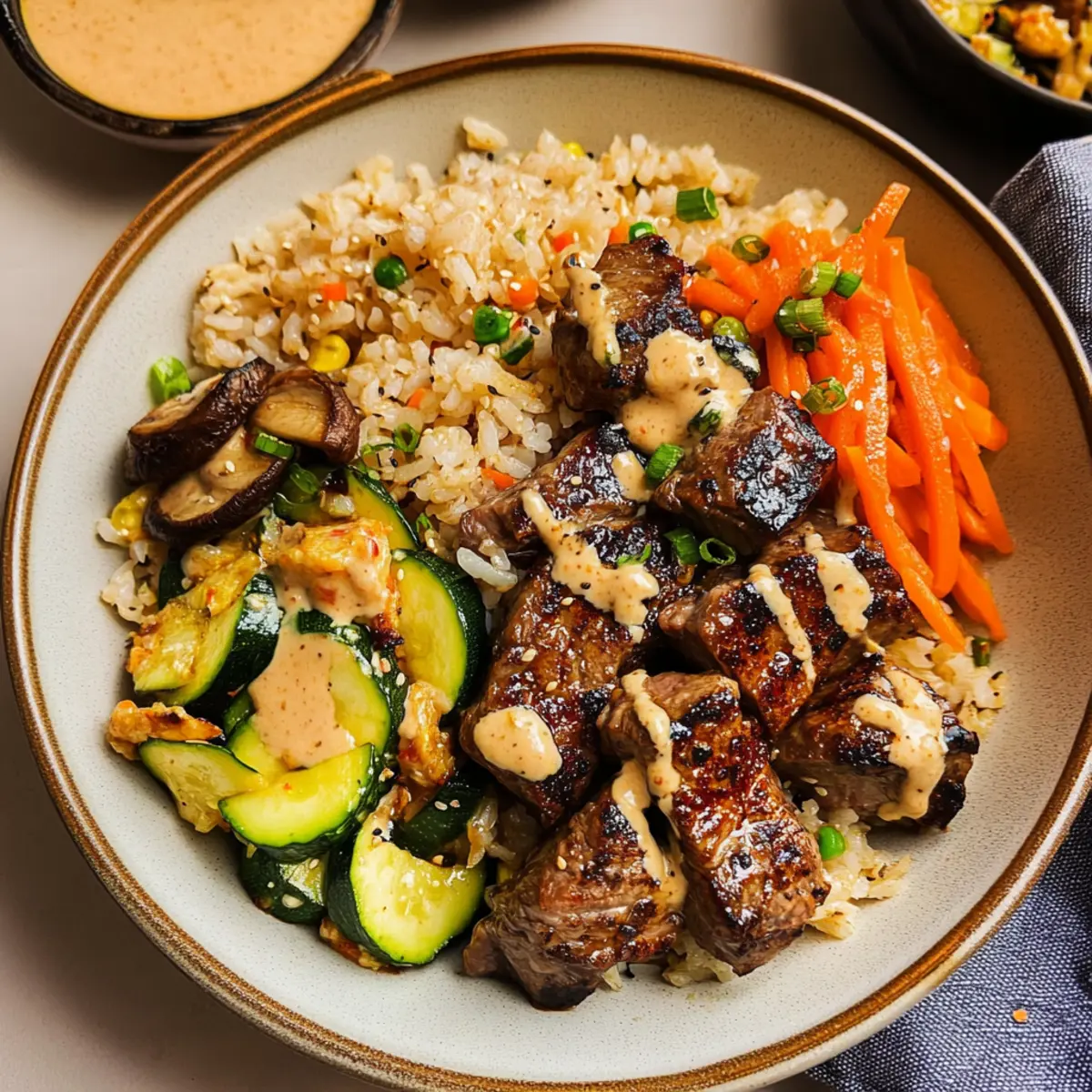
Why are Hibachi Steak Bowls a must-try?
Convenience: Whipping up these Hibachi Steak Bowls takes less than 30 minutes, making it perfect for busy weeknights.
Satisfying Flavors: The rich marinade infused with mirin, garlic, and ginger elevates the taste, delivering a robust flavor profile.
Customizable: Switch up your proteins! Whether you choose chicken, shrimp, or even tofu, this recipe adapts to your preferences. Explore other hearty options with Potato Bowls Loaded for additional weeknight inspiration.
Family-Friendly: Delight your loved ones with a meal that appeals to all ages; the colorful veggies make it appetizing for kids too!
Meal Prep Champion: Cook a big batch ahead of time and enjoy leftovers the next day! Just reheat, and you’re all set for a quick dinner.
Crispy & Tender: The combination of succulent steak, fluffy fried rice, and crisp veggies creates a balanced texture that’s simply irresistible.
Hibachi Steak Bowls Ingredients
For the Steak Marinade
• Sirloin Steak – the main protein, tender and flavorful, perfect for a hibachi bowl.
• Mirin – adds sweetness and depth to the marinade; substitute with rice vinegar mixed with a bit of sugar if unavailable.
• Garlic – provides aromatic flavor; use fresh minced garlic for best results.
• Ginger – adds warmth and spiciness; fresh grated ginger is ideal.
• Sesame Oil – enhances the nutty flavor of the marinade; can be substituted with vegetable oil in a pinch.
For the Vegetables
• Carrots – adds color and sweetness; can be swapped with bell peppers or snap peas.
• Zucchini – offers a mild taste and texture; substitute with bok choy or broccoli florets if preferred.
• Mushrooms – provides umami flavor and texture; consider substituting with onions if desired.
For the Rice Base
• Fried Rice – base for the bowl to add heartiness; can use white rice or jasmine rice as alternatives.
• Soy Sauce – essential for seasoning; adjust to taste—low-sodium soy sauce can be used for a healthier option.
Feel free to dive into the vibrant world of Hibachi Steak Bowls, and let your creativity shine in the kitchen!
Step‑by‑Step Instructions for Hibachi Steak Bowls
Step 1: Marinate the Steak
In a bowl, whisk together mirin, minced garlic, grated ginger, sesame oil, and soy sauce. Submerge the sirloin steak in the marinade, ensuring it’s evenly coated. Cover and refrigerate for at least 30 minutes, allowing the flavors to penetrate the meat. You’ll know it’s ready when the steak appears darker and aromatic!
Step 2: Sauté the Vegetables
Heat a large skillet or sauté pan over medium-high heat and add a drizzle of vegetable oil. Once shimmering, toss in sliced carrots, zucchini, and mushrooms. Stir-fry for about 4–5 minutes until the vegetables are fork-tender yet vibrant in color. The vegetables should be bright and slightly crisp to maintain their fresh flavor.
Step 3: Cook the Steak
Remove the marinated steak from the refrigerator and let it sit for 5 minutes at room temperature. In the same skillet, increase the heat to high and place the steak in the pan. Cook for about 4–5 minutes on each side for medium-rare, adjusting the time to your preferred level of doneness. Look for a nicely charred crust forming on the surface.
Step 4: Prepare the Fried Rice
Once the steak is cooked, remove it from the skillet and let it rest for a few minutes before slicing. In the same skillet, add cooked rice along with any residual marinade, then stir-fry for about 3–4 minutes. Incorporate the sautéed vegetables and toss everything together, allowing the flavors to meld beautifully.
Step 5: Assemble the Hibachi Steak Bowls
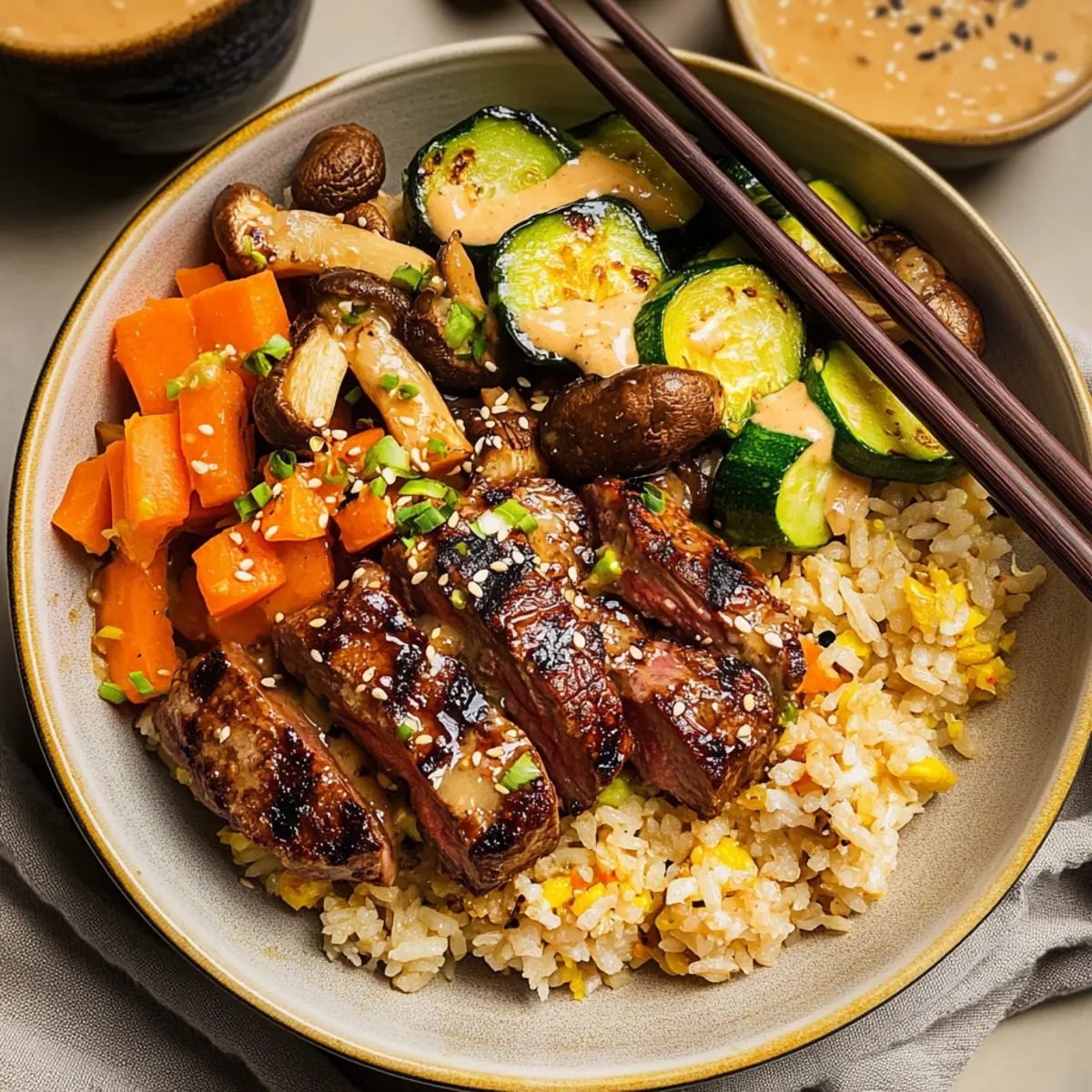
In serving bowls, start by layering a generous scoop of the fried rice mixture. Next, arrange slices of the rested sirloin steak atop the rice, followed by a colorful display of the sautéed vegetables. For that final touch, sprinkle sesame seeds on top for added crunch and flavor. Enjoy your homemade Hibachi Steak Bowls!
Expert Tips for Hibachi Steak Bowls
- High Heat Cooking: Use a high heat when searing the steak to achieve that desirable crust and caramelization. This prevents the steak from steaming and keeps it juicy.
- Resting Period: Let the cooked steak rest for 5–7 minutes before slicing. This allows the juices to redistribute, resulting in more flavorful and tender pieces within your Hibachi Steak Bowls.
- Veggie Crunch: Avoid overcooking the vegetables; keep them vibrant and slightly crispy. This enhances both the texture and visual appeal of your dish.
- Marinade Magic: Don’t skip marinating the steak for at least 30 minutes; this step infuses the meat with deep flavors, enriching your Hibachi Steak Bowls.
- Leftover Potential: Prepare a larger batch for meal prepping. These bowls reheat well and make for quick lunches, ensuring you have a nutritious option ready ahead of time.
Hibachi Steak Bowls Variations & Substitutions
Discover how to customize your Hibachi Steak Bowls to suit your cravings and dietary needs!
-
Chicken Thighs: Swap out the steak for juicy chicken thighs for a tender and flavorful alternative.
-
Shrimp Delight: Use shrimp instead of steak for a light and quick protein option. Perfect for seafood lovers!
-
Tofu Twist: For a vegetarian meal, replace the steak with tofu or tempeh, marinating just like the original for fabulous flavor.
-
Quinoa Base: Consider using quinoa instead of fried rice for a protein boost; a great gluten-free option too!
-
Bell Pepper Boost: Add colorful bell peppers for an extra burst of sweetness and crunch among the veggies.
-
Spicy Kick: Elevate the heat by incorporating sliced jalapeños or a dash of sriracha into the stir-fry for those who love spice.
-
Mushroom Medley: Swap in shiitake or portobello mushrooms for a richer umami flavor in place of traditional mushrooms.
-
Low-Sodium Option: Use low-sodium soy sauce to maintain flavor while making the dish a bit healthier, ensuring you don’t miss out on taste.
Feel free to experiment and make these Hibachi Steak Bowls your own. For more creative dinner ideas, don’t miss out on checking out Potato Bowls Loaded and bring even more deliciousness to your table!
Make Ahead Options
These Hibachi Steak Bowls are superb for busy home cooks looking to save time! You can marinate the sirloin steak up to 24 hours in advance, allowing the flavors to truly develop. Additionally, chop the vegetables (carrots, zucchini, and mushrooms) and store them in an airtight container in the refrigerator for up to 3 days. This way, when you’re ready to serve, simply sauté the prepped veggies and cook the marinated steak right before serving. Remember, letting the steak rest after cooking ensures it stays juicy. This preparation makes it easy to enjoy delicious Hibachi Steak Bowls even on the most hectic weeknights!
What to Serve with Hibachi Steak Bowls?
These delightful bowls are a great starting point for a full meal experience that excites the senses.
-
Creamy Mashed Potatoes: Their smooth, buttery texture complements the savory notes of the steak bowls while adding a cozy touch.
-
Crisp Garden Salad: A refreshing mix of greens and sliced cucumbers provides a crunchy contrast to the rich flavors of the hibachi bowls. Toss in a light vinaigrette for zest!
-
Grilled Asparagus: The smoky flavor of grilled asparagus enhances the meatiness of the steak, creating a delightful balance of tastes on the plate. It’s a vibrant and healthy side dish!
-
Steamed Edamame: These tender little beans add protein and a sweet, nutty flavor that aligns beautifully with the umami notes of the hibachi bowl.
-
Yum Yum Sauce: This creamy dipping sauce offers a tangy flavor that pairs well with both the steak and the vegetables, elevating each bite to a new level of deliciousness.
-
Fruit Sorbet: End the meal with a refreshing fruit sorbet. The chilled, fruity sweetness is a light way to cleanse the palate after a hearty dinner.
Transform your Hibachi Steak Bowls into a memorable feast with these delightful accompaniments!
Storage Tips for Hibachi Steak Bowls
Fridge: Store leftover Hibachi Steak Bowls in an airtight container in the refrigerator for up to 3 days. This helps maintain freshness and flavor.
Freezer: For longer storage, freeze individual portions in airtight containers for up to 2 months. Thaw overnight in the fridge before reheating.
Reheating: Reheat in the microwave for 1-2 minutes or on the stovetop over medium heat, adding a splash of water or broth if needed to maintain moisture.
Hibachi Steak Bowls Recipe FAQs
What type of steak should I use for Hibachi Steak Bowls?
You can use sirloin steak for its tenderness and flavor, but ribeye or flank steak also works wonderfully. Just ensure it’s well-marbled for the best taste! If you prefer different proteins, chicken thighs or shrimp are excellent alternatives.
How should I store leftover Hibachi Steak Bowls?
Store leftover Hibachi Steak Bowls in an airtight container in the refrigerator for up to 3 days. Ensure they are cooled to room temperature before sealing to maintain freshness. This way, every bite remains just as delightful as the first!
Can I freeze Hibachi Steak Bowls?
Absolutely! For optimal storage, freeze the steak, rice, and veggies in individual airtight containers for up to 2 months. When you’re ready to enjoy, simply thaw overnight in the fridge. To reheat, warm in the microwave for 1-2 minutes or on the stovetop over medium heat, adding a splash of water or broth for moisture.
How do I prevent my vegetables from getting soggy?
To keep your vegetables vibrant and slightly crisp, cook them on high heat for just a few minutes. Aim for that fork-tender, yet crunchy texture! I often recommend stirring them only occasionally to achieve that perfect balance.
Are there any allergy considerations for Hibachi Steak Bowls?
Yes, keep an eye out for common allergens! Soy sauce contains gluten, so consider using a gluten-free variety if needed. The sesame oil can be swapped with vegetable oil, accommodating those with sesame allergies. Plus, if someone has garlic intolerance, you can omit it; just remember the flavor might change slightly.
How ripe should my vegetables be for stir-frying?
For the best results, choose vegetables that are fresh and crisp, with no dark spots or wilting. Carrots should be firm and bright orange, zucchini should have a firm texture, and mushrooms should be plump. This guarantees that your Hibachi Steak Bowls are as delicious as they are colorful!
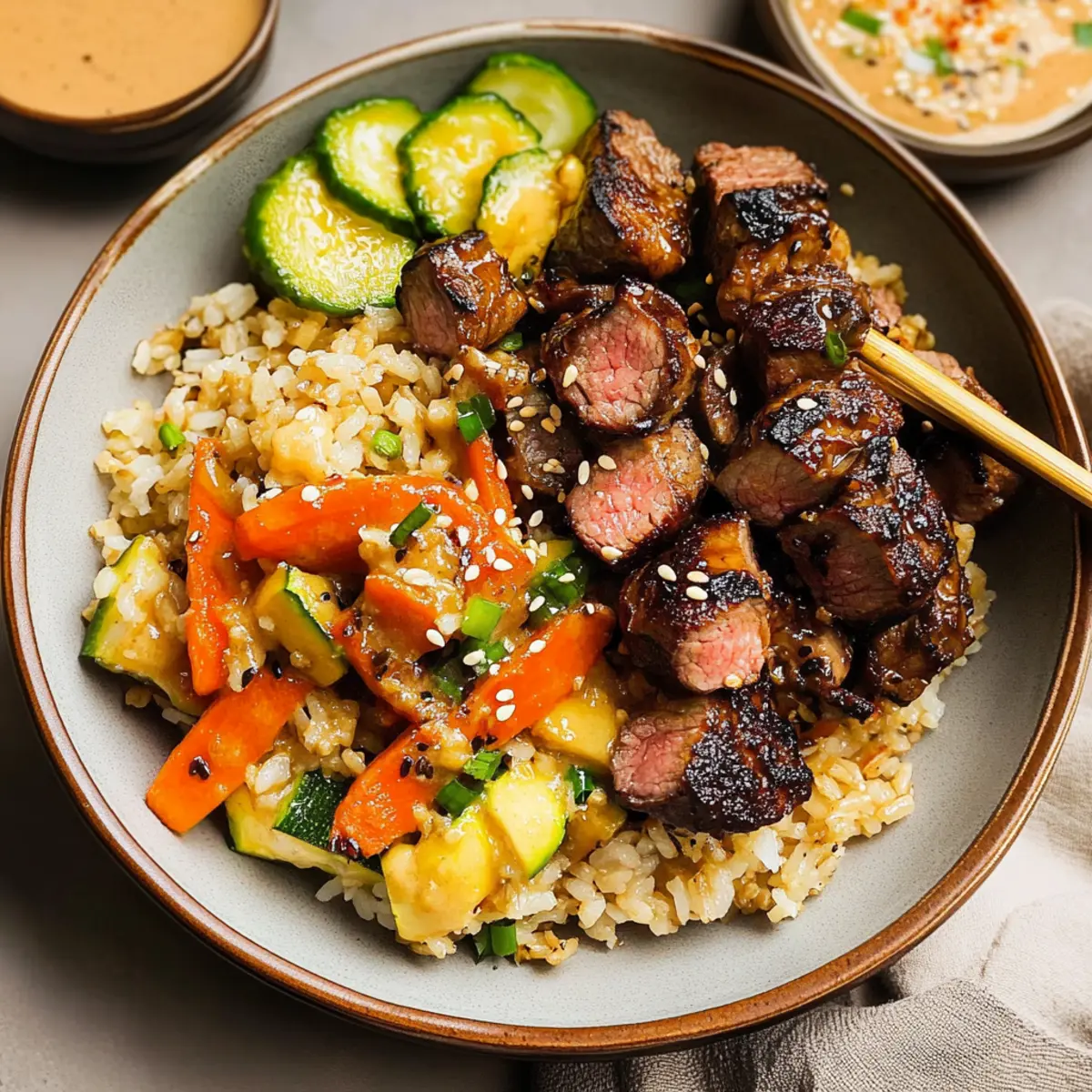
Hibachi Steak Bowls: A Flavorful Twist on Weeknight Meals
Ingredients
Equipment
Method
- In a bowl, whisk together mirin, minced garlic, grated ginger, sesame oil, and soy sauce. Submerge the sirloin steak in the marinade, ensuring it’s evenly coated. Cover and refrigerate for at least 30 minutes.
- Heat a large skillet or sauté pan over medium-high heat and add a drizzle of vegetable oil. Once shimmering, toss in sliced carrots, zucchini, and mushrooms. Stir-fry for about 4–5 minutes until the vegetables are fork-tender yet vibrant in color.
- Remove the marinated steak from the refrigerator and let it sit for 5 minutes at room temperature. In the same skillet, increase the heat to high and place the steak in the pan. Cook for about 4–5 minutes on each side for medium-rare.
- Once the steak is cooked, remove it from the skillet and let it rest for a few minutes before slicing. In the same skillet, add cooked rice along with any residual marinade, then stir-fry for about 3–4 minutes.
- In serving bowls, start by layering a generous scoop of the fried rice mixture. Next, arrange slices of the rested sirloin steak atop the rice, followed by a colorful display of the sautéed vegetables. Sprinkle sesame seeds on top.
Leave a Reply